The Bazaar Isn't Empty: Reading Lahore Listings Without American Filters
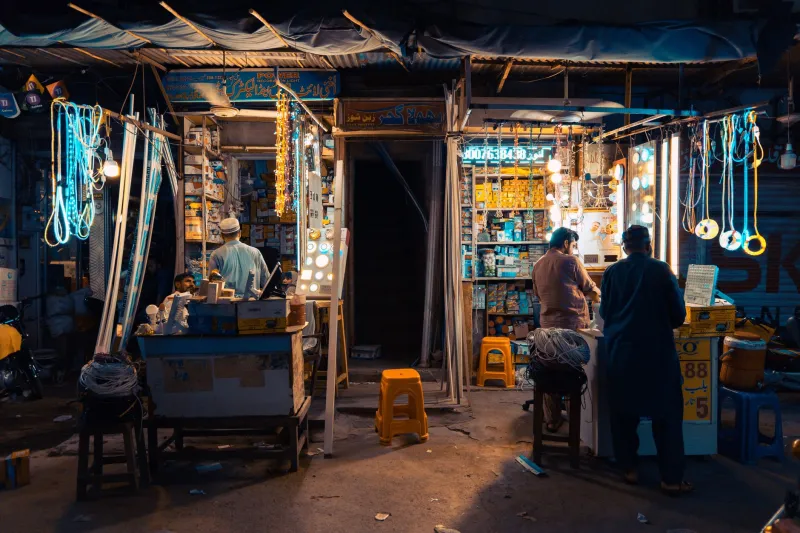
If you came of age on American classifieds, you know the feeling of a ghost town. Craigslist personals closed in 2018 after federal legislation changed the rules, Backpage was seized the same year, and the big U.S. platforms spent the next several years building fences. By 2026, the American classifieds experience is often a study in locked doors: verify this, log in there, no adult content here, no direct contact until the algorithm says so. So when U.S. browsers land on a Lahore-based scene like Locanto Lahore, the first reaction is often sensory overload. It looks busier. It looks less polished. It looks, frankly, like a bazaar.
The ghost town we grew up with
American listings culture taught us to read emptiness as safety and clutter as risk. A sparse page feels regulated. A dense page feels sketchy. That instinct made sense in a U.S. market shaped by platform liability, payment processing rules, and state attorneys general. But it is a local instinct, not a universal one. Lahore's adult listings scene did not grow up under the same fences. It grew up in a city of print ads, phone numbers, repeat posters, and word-of-mouth reputation. The result is not a lawless free-for-all. It is a different marketplace with different signals.
A bazaar has a different pulse
In a bazaar, the same shop may appear three times under slightly different names. A seller may post in English, Urdu, or a mix. Prices are sometimes stated, sometimes hinted at, sometimes negotiated. Some listings are stale. Some are automated. Some are exactly what they say. The noise is not proof of danger; it is proof of volume. American browsers often bring a search-engine mindset to a bazaar: filter, verify, click, buy. Lahore listings reward a slower read. Look at how long a poster has been active, whether the same number appears in older ads, whether the language matches the claimed location, and whether the person answers basic questions without rushing you off-platform.
What counts as a trust cue here
Local trust cues are not the same as American trust cues. A blue check mark is not the norm. A polished landing page is not the norm. What often matters more is consistency. Does the listing's story stay the same across posts? Does the poster use local references that fit Lahore? Are they patient enough to answer a simple question? Do they push you to send money or move to another app in the first three messages? Those are better signals than font choice or photo quality.
Another cue is pacing. A quick reply is nice, but a slow reply is not automatically a scam. Many people check classifieds in the evening, not during a U.S. workday. A poster who replies at 11 p.m. Lahore time may be perfectly normal; a poster who replies at 3 a.m. your time is not proof of anything either. Context matters. So does repetition. A single odd detail is just a detail; a pattern of odd details is a reason to slow down.
The assumptions Americans pack in their bags
U.S. browsers tend to assume three things: that silence means rejection, that directness means honesty, and that clutter means danger. All three can be wrong in Lahore. Silence may mean the listing is old, the person is busy, or the message arrived at an awkward hour. Directness may be local bluntness, not a scam. Clutter may be a healthy market with many posters, not a warning sign. The mistake is not having assumptions; it is letting them vote twice.
Americans also expect platform-style protections: reviews, refunds, dispute buttons, verified identities. Those things are not standard in every local classifieds culture. That does not mean you should abandon caution. It means you should use the caution that fits the context: keep conversations on-platform until you are comfortable, avoid sending money to strangers, and trust your gut when a listing feels off. But do not confuse foreign with fraudulent. A scene that looks unfamiliar to you is not automatically unsafe; it is simply unfamiliar.
How to browse without flattening the place
Read a handful of listings before you message anyone. Notice the rhythm. See which posters repeat, which categories are active, and which phrases keep showing up. Treat the first message like a local introduction, not a customer service ticket. Ask one clear question. Give the poster a reasonable window to reply. If the listing is in Urdu and you are using translation, say so. If you are in the U.S., mention your time zone so the other person knows why your replies may be delayed.
Locanto Lahore is closer than you think, but it is not a U.S. platform with a Lahore skin. It is a local scene with its own pace, its own cues, and its own idea of what a classifieds page should feel like. The bazaar is not empty. It is just not arranged for your convenience.
The takeaway
American browsers do not need to abandon their instincts. They need to recalibrate them. The ghost town of U.S. classifieds trained us to see fences everywhere. Lahore's listings scene asks for a different read: slower, more contextual, less algorithmic. If you can stop projecting the American marketplace onto it, you will notice what is actually there - a busy local scene with human pacing and local trust cues. That is not a warning. It is a map.