Before the First Hello: What Lahore Personal-Ad Photos Actually Tell You
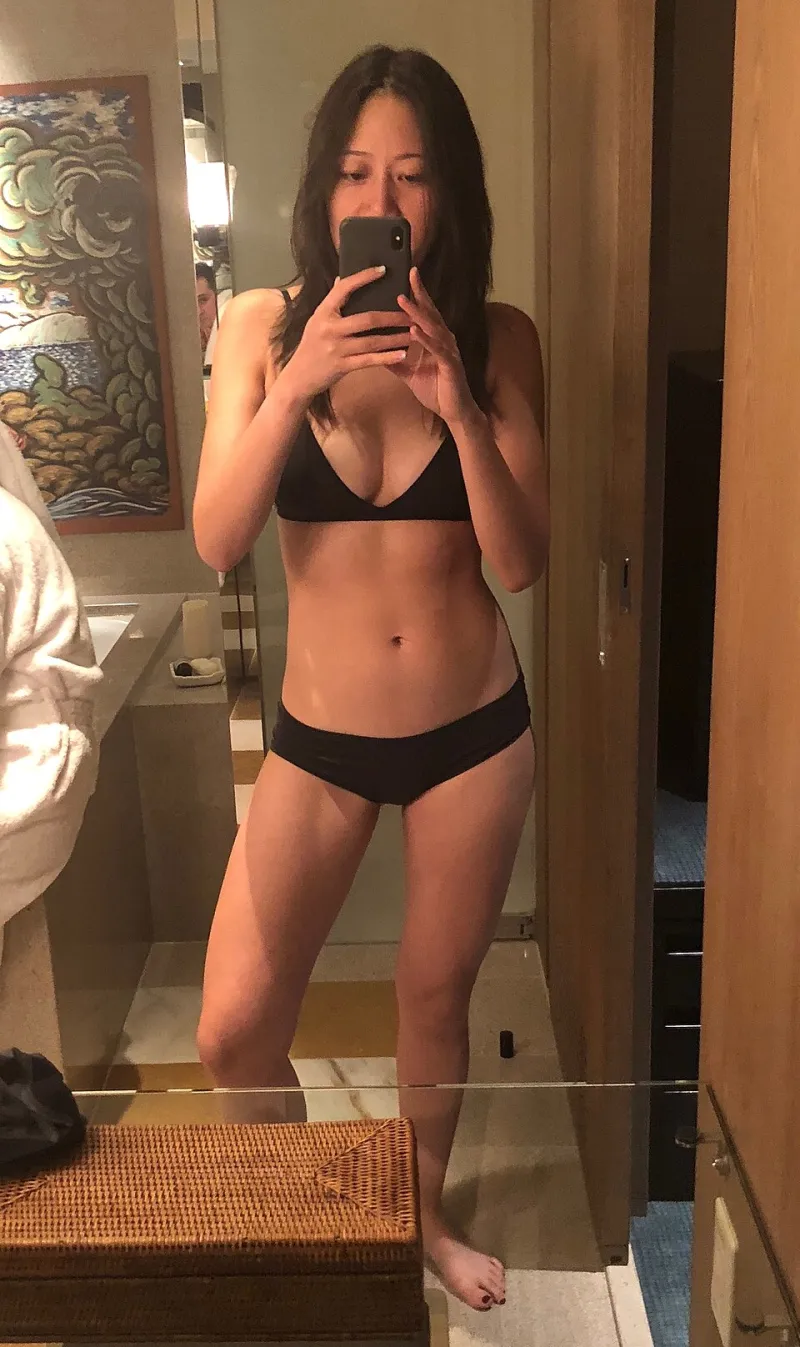
Photo: Tiffany, CC0, via Wikimedia Commons
If you are browsing Locanto Lahore from the United States, the first thing you see is rarely a paragraph. It is a photo: a mirror selfie, a cropped portrait, a street-side shot with a scooter leaning into the frame. In 2026, those images carry a lot of weight because they arrive before any conversation does. The trick is to read them as context, not as evidence. A listing photo is not a job interview, a passport, or a lie detector. It is a small visual hello from a city with its own visual habits.
The Mirror Is Part of the Room
Mirrored selfies are common in Lahore personals, and not because everyone is trying to hide something. Phone cameras are the default camera. Bedroom mirrors are common. Rooms are often small. A mirror lets someone check the frame without asking a friend to take a picture. When the image is flipped, Urdu text on a poster or a brand name on a shirt may appear backward. That is physics, not fraud.
What matters is consistency. Does the reflection match the person? Does the room look like the same room across two photos? A mirror can show a door, a curtain, a ceiling fan, or a stack of cushions. Those details are not clues to be scored. They are atmosphere. If a profile has one sharp mirror selfie and three unrelated professional shots, you can note the mismatch without announcing it like a detective.
Backgrounds Are Louder Than Filters
Lahore interiors often include things an American browser might not register: tiled floors, embroidered cushions, a water cooler, an inverter for power backups, a charpai near a wall, heavy curtains against afternoon light. None of these are secret codes. They simply say that the photo was taken in a home, a guest room, or a family space, not in a studio.
A moped or motorcycle in the background is another ordinary detail. In Lahore, two-wheelers are part of daily traffic. Seeing one parked near a gate does not mean danger, and it does not mean the person is trying to send a message about mobility. It means the photo was taken where someone lives or works. The same goes for a ceiling fan, a plastic stool, or a laundry line. These are background facts, not character judgments.
Filters and edits do exist. Some listings use smoothing apps, brightening, or stickers. A heavy filter can make a room look generic. A slightly blurry photo can be a privacy choice. Do not assume that a polished image is honest and a rough image is suspicious. In classifieds, rough often means real.
Screenshots, Timestamps, and the Tell-Tale Crop
A photo that is actually a screenshot can tell you more than the face does. You may see a battery icon at the top, a carrier label, a date stamp, or the edge of a chat app. Sometimes that means the photo was saved and reused. Sometimes it means the person only had that image handy. In 2026, phone interfaces change often, so an older-looking screenshot is not automatically a red flag. It is simply a reason to ask a natural question.
Cropping is similar. A tight crop around a face removes the room, the posture, and the context. That can be a privacy decision or a style choice. If you want more context, ask for it gently. 'Is that your courtyard in the second photo?' works better than 'Send me an unedited picture right now.' The first invites a conversation. The second invites a wall.
What American Browsers Tend to Misread
A few misreadings show up again and again. A serious expression is often just a posing habit, not hostility. Traditional clothing does not mean someone is unavailable or conservative in every part of life. A group photo may include cousins, coworkers, or friends; do not assume everyone in the frame is a rival or a partner. Emoji stickers and text overlays are common communication, not necessarily a sign of immaturity.
Also, be careful with the word 'authentic.' A photo taken in a modest room can be more authentic than a hotel-lobby portrait. A moped in the frame can be more local than a generic city skyline. The goal is not to decide whether someone is 'really' Pakistani or 'really' in Lahore. The goal is to see what the image is doing and respond to the person behind it.
A 2026 Photo-Etiquette Guide for Replies
- Mention the photo without turning it into a review. 'That is a great shot of the old city' is fine. A paragraph about someone's body is not.
- Ask about the setting if you are curious. Backgrounds are safer conversation starters than appearances.
- If you want a newer photo, offer one of your own first. Reciprocity lowers the temperature.
- Do not reverse-image-search someone and then announce your findings. If something feels off, ask a simple question or step away.
- Never screenshot a listing photo and share it in a group chat. Discretion is the whole point of this corner of the internet.
- Avoid comments about weight, skin tone, family members, or income clues. You are not auditing a loan application.
- If a person declines to send more photos, accept it. A 'no' about images is still a 'no.'
When Caution Is Warranted, and When It Isn't
Caution is reasonable when photos are obviously lifted from a catalog, when the same face appears under different names, when every message pushes toward a deposit, or when simple context questions get dodged. Caution is not reasonable just because a selfie is mirrored, a room is plain, a phone is older, or a moped is parked outside.
The useful middle ground is curiosity with boundaries. You can enjoy the visual texture of a Lahore listing without treating it as a crime scene. You can notice the fan, the tiles, the backward text in the mirror, and the timestamp at the top of the screen, then ask a normal question. That is what visual literacy looks like in practice: less suspicion, more context.
Locanto Lahore is a local feed, and local feeds are full of ordinary detail. The photo is not the verdict. It is the opening line. Read it, enjoy it, and reply like a person who knows the difference between a clue and a culture.