The Mattress Archive: How Lahore's Print Personals Shaped a Digital Discretion Economy
Lahore's adult personals scene has a longer memory than its search bars suggest. Before apps, before moderated forums, before anyone in the United States was comparing local classifieds to Craigslist, Lahore had a working system for private introductions. It lived in Urdu-language newspaper columns, in hand-typed notices pinned near bus stops, and in the whispered referrals of cousins and neighbors. The system was not always pretty, and it was never as anonymous as it looked. But it was local, and it taught people how to say a lot with very little.
The Mattress Archive
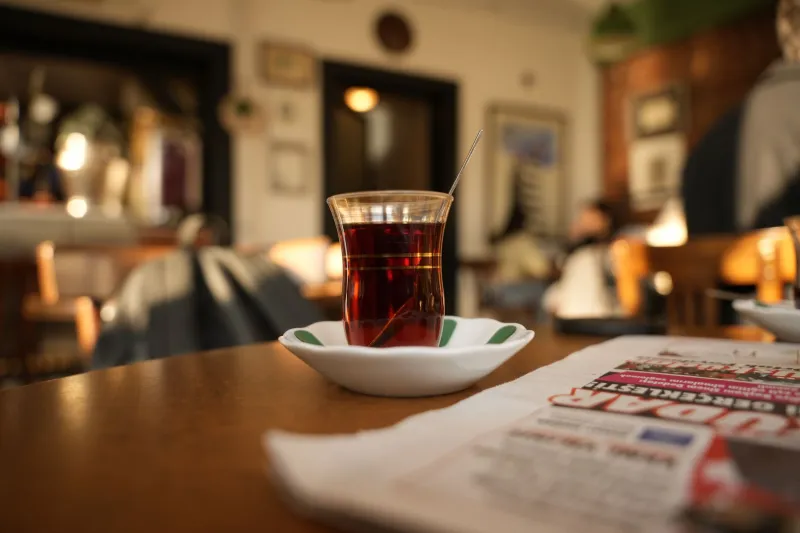
Ask enough Lahore families about old newspapers and you will hear a version of the same joke: the real archive was under the mattress. Not because every page was scandalous, but because certain columns were read privately, folded carefully, and never left on the coffee table. A notice might be as simple as a boxed line seeking a companion for conversation. The wording was restrained. The placement mattered. The timing mattered. And the reader understood that the point was not to broadcast a need but to find the right kind of quiet.
For a US audience raised on Craigslist's blunt subject lines and garage-sale candor, that rhythm can feel almost like a different language. American classifieds culture rewards directness: state what you have, state what you want, include a photo if you are brave. Lahore's personals culture learned the opposite lesson. It rewarded plausibility. It rewarded the sentence that could be read one way by a stranger and another way by the person who already knew what to look for.
A City That Learned to Whisper in Print
Part of this is practical. Lahore is a dense, social city where reputations travel faster than traffic on Ferozepur Road. Privacy is not a luxury accessory there; it is a social skill. In the 1980s and 1990s, when print classifieds were a bigger part of urban life, people who wanted to place or answer a personal ad had to think about who might see the paper first. A brother. A colleague. A landlord. The result was a style of writing that depended on implication rather than confession.
That is why Lahore's old-school personals often sound less like advertising and more like diplomacy. A line about 'friendship' could mean friendship. It could also mean something else. A mention of a profession, a neighborhood, or a preferred meeting time did more work than a paragraph of description. Readers learned to scan for tone, not just text. They learned that a missing detail could be the most important detail of all.
Code Words, Column Inches, and Plausible Deniability
Craigslist never needed much plausible deniability. Its early culture was built around speed, anonymity, and the cheerful mess of the open web. Lahore's print culture had the opposite inheritance. It grew up around column inches and consequences. A personal ad had to survive being read aloud by someone else. It had to survive being misunderstood on purpose. It had to survive the possibility that the wrong person would recognize the handwriting, the phone number, or the neighborhood reference.
So the language became layered. Certain phrases acted like filters. They were not secret codes in the spy-movie sense; they were social codes. They told the careful reader that the person placing the notice understood the local rules. That is a distinctly Lahori form of discretion, and it is still visible in the way adult-oriented listings are written on locantolahore.com in 2026. The best listings do not shout. They create a small, readable signal inside a larger, ordinary sentence.
Wall Posters and Word-of-Mouth
Newspapers were only one channel. Lahore also had wall notices, shopfront flyers, and the informal networks that moved information through tea stalls, barber shops, and family connections. Word-of-mouth was especially powerful because it came with built-in vetting. If a friend said someone was 'decent' or 'serious,' that meant more than any printed claim. Reputation worked as a kind of pre-screening.
That habit did not disappear when the internet arrived. It just changed shape. Digital classifieds made it easier to browse, but local users still carry the old instinct to check context before committing. They notice how a listing is phrased. They notice whether the poster seems to understand the city. They notice when something feels too eager, too generic, or too American in its directness. In that sense, the mattress archive never really closed. It moved online.
From Newsprint to Notifications
The shift from print to digital did not erase Lahore's personals culture. It compressed it. A newspaper notice might have taken days to place and days more to answer. A digital listing can go live in minutes. But the underlying etiquette remains: be careful, be local, and do not confuse visibility with safety. That is why a site like locantolahore.com reads differently from a generic US classifieds page. It is not just a list of ads. It is a local conversation with a long memory.
For American browsers, the comparison is useful. Craigslist taught a generation that classifieds could be fast, weird, and anonymous. Lahore's tradition teaches something else: that discretion can be a form of intelligence. It is not about hiding everything. It is about choosing what to reveal, to whom, and at what pace. That is a more deliberate way to use a listings site, and it explains why the local rhythm still matters in 2026.
What American Browsers Can Take Away
If you are browsing from the US, treat Lahore's personals culture as a local guide, not a novelty. Read for tone. Respect the euphemisms. Do not assume that a restrained listing is vague or unserious. In many cases, the restraint is the point. It is how local users protect themselves, filter out bad actors, and keep private business private in a city where privacy has always required a little craft.
The newspaper under the mattress is gone from most homes, but its logic is still online. Lahore's adult listings carry the DNA of print columns, wall notices, and family networks. That is what makes them distinctive in 2026, and it is why a US visitor should slow down enough to read the quiet parts.