The Thermostat in the First Line: Language Switches in Lahore Personals
Photo: Inglid, CC BY-SA 4.0, via Wikimedia Commons
A first message in a Lahore personals feed is not just a greeting. It is a thermostat. It tells the other person how warm the room is, how formal to be, and how much room there is to relax. Sometimes it does all three at once. For a U.S. browser used to opening with a breezy 'Hey, how's it going?' the language choice can look like decoration. In practice, it is often the message before the message.
The Opener Is a Thermostat, Not a Test
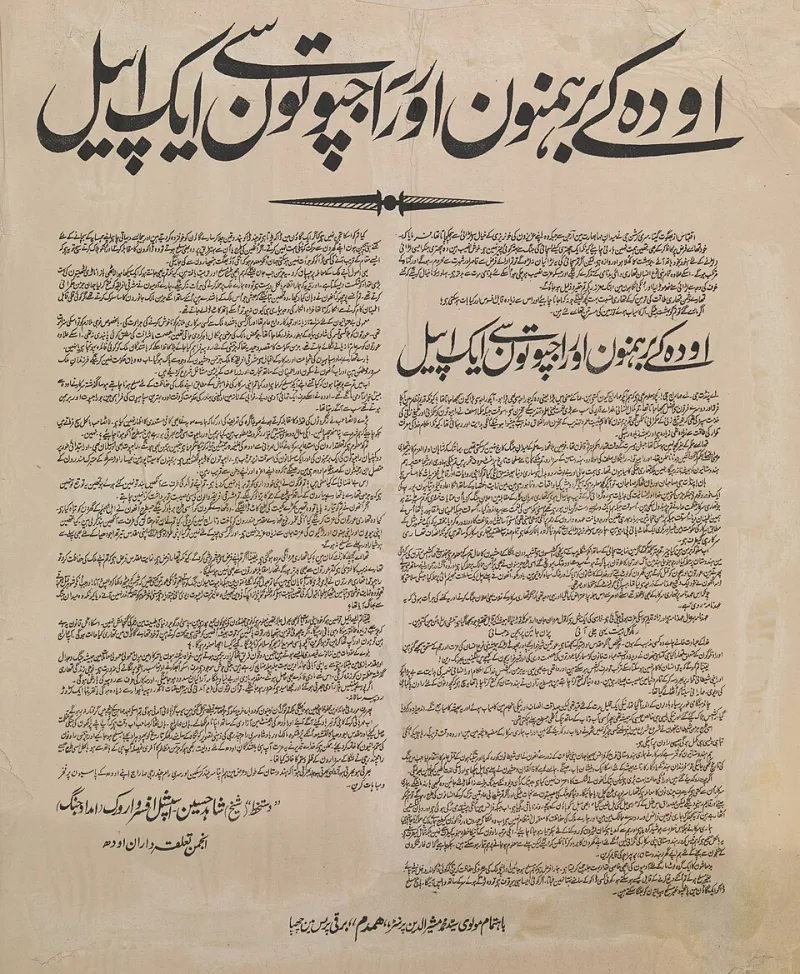
People in Lahore move between English, Urdu, and roman Urdu all day. The same person may text a colleague in English, call a cousin in Urdu, and send a voice note in a Punjabi-Urdu blend that does not fit neatly into any box. So when a listing or a reply arrives in one language rather than another, it is not usually a loyalty test. It is a setting. English can signal distance, professionalism, or caution. Urdu can signal warmth, local ease, or a wish to keep things inside a familiar cultural frame. A mix can signal that the person is trying to meet you where you are.
The mistake is treating the opener as a password. You do not need to prove you belong. You need to notice what temperature the other person has set and respond without cranking the dial too far in either direction.
What an English Opener Usually Signals
An English opener in a Lahore personal ad often reads clean and careful. Something like 'Hi, I saw your listing and wanted to introduce myself' can be a sign of discretion. It is the language of offices, university corridors, and formal messages. It can also be the language someone uses when they want a little buffer. English does not automatically mean cold. It can mean polite, structured, or simply easier to type on a phone keyboard that keeps autocorrecting Urdu words into nonsense.
For an American reader, the temptation is to answer in either very casual English or very formal English. Both can miss. A wall of 'Heyyy what's up' may feel too loose for a chat that opened with a measured introduction. A stiff 'Dear Sir/Madam, I am writing to express my interest' may feel like a job application. The middle ground is plain, friendly English: 'Good to meet you—thanks for the reply. What part of Lahore are you in?' That keeps the temperature steady.
What a Roman-Urdu Opener Usually Signals
Roman Urdu is the everyday written language of a huge number of chats in Pakistan. When someone opens with 'Assalam o Alaikum' or 'Kya haal hai?' they are often signaling local ease. It can feel warmer than an English opener, but it is not automatically more intimate. Plenty of people use roman Urdu for everyone from close friends to casual acquaintances. It is simply the texture of normal conversation.
The useful signal is not the language alone. It is the amount of care around it. A short 'hi' in roman Urdu may be low-effort. A line that includes a small specific detail—'Assalam o Alaikum, I saw you mentioned you like old Lahore food spots'—shows the person read the listing. That matters more than whether the verb is in English or Urdu.
The Mix Is Often the Message
Many Lahore chats begin in one language and drift into another within three messages. That drift is normal. It is not indecision. A bilingual reply can be doing extra work: it can soften a request, acknowledge a cultural cue, or keep a conversation from becoming too stiff. For example, an English sentence followed by 'ji' can take the edge off a direct question. A roman-Urdu greeting followed by an English sentence about schedules can keep things warm while staying practical.
When a reply is bilingual, read it as a whole. Do not parse every word as a clue. Ask yourself what the person is trying to make easier. Are they matching your tone? Are they adding a small courtesy? Are they keeping one foot in formality while inviting you to relax? Those are the useful questions.
Mirror, Don't Mimic
U.S. browsers sometimes overcorrect. They see roman Urdu and immediately try to write long, fluent sentences in a language they do not actually speak. That can read as performance. The better move is to mirror the level of formality, not the language itself. If someone writes a short, friendly English message, answer in short, friendly English. If they greet you with 'Assalam o Alaikum,' you can return the greeting respectfully, even if the rest of your message stays in English. That is not fake fluency. It is basic courtesy.
A simple rule: do not use a language you cannot handle just to impress someone. Use the words you actually know. 'I hope that's okay—I'm more comfortable in English, but I'm happy to keep chatting' is more attractive than a copied phrase that falls apart in the next line.
When the Reply Is Doing Extra Work
A bilingual reply can be a small act of hospitality. If someone switches into English after you write in English, they may be trying to make you comfortable. If they add a roman-Urdu phrase after an English sentence, they may be trying to keep the exchange from feeling like a customer-service email. If they answer a scheduling question with 'InshaAllah' plus a specific day, read the specific day. If they answer with only 'InshaAllah,' treat it as soft and unconfirmed, not a locked appointment.
Tone matters more than translation. A reply that looks brief in literal terms may be warm in context. A reply that looks polite in English may still be guarded. Look for specifics, follow-up questions, and small courtesies. Those are the real temperature readings.
Three Small Habits That Keep the Chat Warm
First, acknowledge the opener rather than steamrolling it. A simple 'Thanks for the warm hello' or 'Nice to meet you too' costs nothing and shows you noticed the tone.
Second, ask one clear question at a time. Language switching gets messy when a message contains five asks. Keep it human.
Third, do not make the other person explain their language choices. Nobody wants to give a lecture on code-switching before the first coffee. Just respond naturally and let the chat settle.
In Lahore personals, the first line is a small thermostat. It tells you whether to bring a blazer or take off your shoes. You do not need to master the whole language to read it. You just need to pay attention, stay plain, and let the warmth build on its own.